
IMH Group · High-Density Pallet Storage
Drive-In & Drive-Through Pallet Racking
Store multiple pallets of the same product in deep lanes. IMH designs drive-in and drive-through racking systems around your inventory rotation, pallet sizes, lift equipment, and building layout.
Request a Drive-In Racking Quote →Serving Southern California from Riverside and New Jersey from Delran
What Is a Drive-In Racking System?
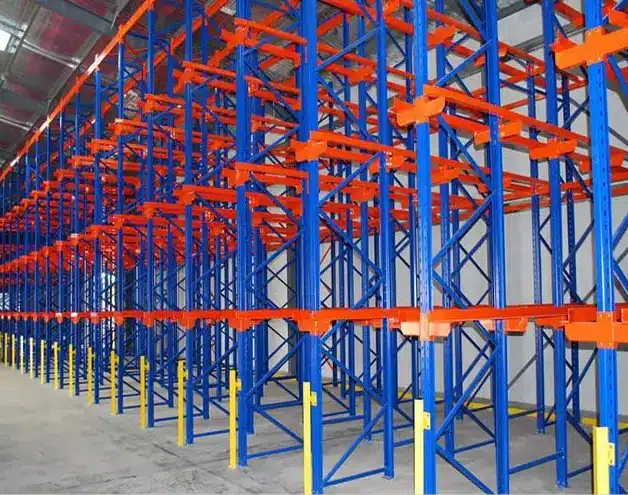
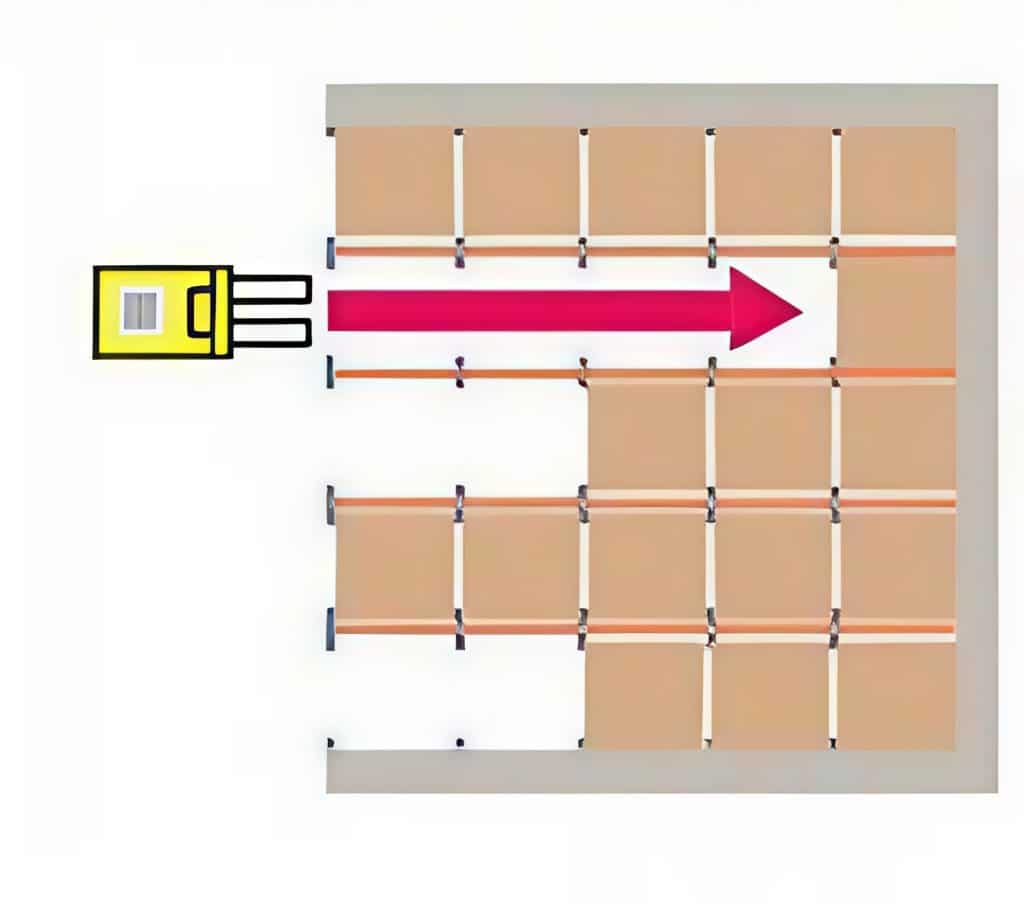
Drive-in pallet racking is a high-density storage system that places several pallets behind one another in each lane. Pallets rest on support rails, and a forklift enters the rack lane to place or retrieve them. Grouping pallets this way reduces the number of access aisles needed across a storage zone.
Drive-in racks work best when you have several pallets of the same SKU, lot, or inventory group and can move them in the order the lane allows. If an operation needs frequent access to individual pallets across many SKUs, a mix of drive-in lanes and selective pallet racking may make better use of the building. Reserve deep lanes for products that can fill them, then keep high-variety inventory in rows with direct pallet access.
Drive-In vs. Drive-Through Pallet Racking
Drive-In Racking · Single-Side Access
Loading and retrieval take place from the same aisle. The last pallet placed in a lane is generally the first available for retrieval, which supports last-in, first-out (LIFO) handling. This option suits bulk stock where pallets in a lane can be picked in that order.
Drive-Through Racking · Two-Side Access
Also called drive-thru racking, this configuration provides access at both ends. When one end is dedicated to loading and the other to retrieval, the lane can support first-in, first-out (FIFO) handling. The layout needs room for working aisles on both sides and a traffic plan that supports the intended flow. When working aisles run alongside pedestrian routes, review where forklift traffic barriers may fit.
Choose based on which pallets must leave first and whether the building can accommodate the access pattern. If you need date-based rotation, describe how you assign lots and pick orders so we can compare the rack layout with your actual process.
High-Density Racking for Cold Storage & Bulk Inventory
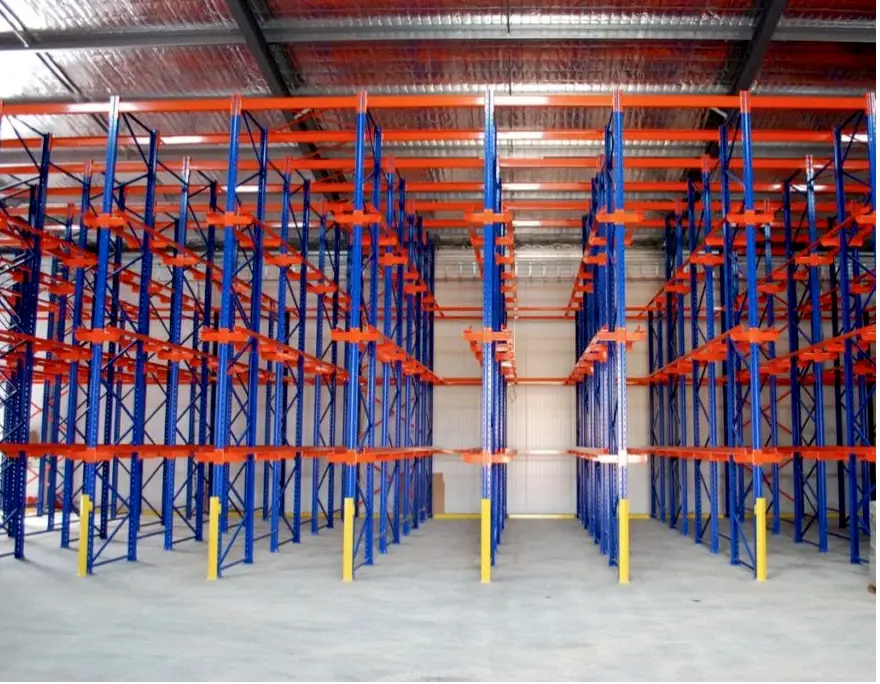
Cold rooms and freezers often have limited floor area and repeated pallet loads. Drive-in racking can be a fit when each storage zone handles enough pallets of the same product to keep deep lanes in use. Give us your typical and peak inventory by SKU or lot, along with the number of pallets you usually receive or release together.
Compare usable pallet positions with the number of lanes you expect to keep full. A lane assigned to a product with only a few pallets may leave positions unused even when the warehouse looks full on paper. If you split inventory by lot or expiration date, include those rules in your capacity estimate.
For a freezer or cooler, share room dimensions, door locations, equipment information, and any layout constraints from the facility team. We can review the storage arrangement with our warehouse layout design team.
Designing a New Drive-In Pallet Racking System
Set lane depth and storage levels
Start with pallet dimensions, loaded weights, and how many pallets of each product are normally on hand. We can compare shallower and deeper lanes against expected inventory levels and the building footprint.
Review pallets and lift equipment
Send your pallet specifications and forklift make and model. We review the proposed rack and the equipment together so the project team can identify what needs to be confirmed before ordering.
Plan engineering and installation
IMH can coordinate custom rack manufacturing, engineering and permit support, and installation as part of the agreed scope. Share your project city and target date early so we can discuss the sequence.
When to Compare Drive-In Racks With Other Storage Systems
Start with a sample of your inventory across several weeks. Look at the number of pallets per SKU, how often each product is replenished, and how exceptions such as partial lots are handled. A high-volume product that arrives in predictable batches can use a deep lane well. A product that arrives in small quantities or needs frequent individual retrieval may use the same space less effectively.
If forklifts need to stay in the aisle during loading and retrieval, compare push-back racking. It offers multi-deep storage from one working aisle and is another option when LIFO handling fits the operation. If direct access is more important, compare selective rows. The best mix may vary across a single warehouse.
Before comparing quotes, ask whether both proposals are based on the same pallet sizes, storage levels, and inventory assumptions. Check whether the quoted pallet count reflects every theoretical position or the positions you expect to use with normal stock rotation. Also compare the scope for layout drawings, delivery, installation, and any follow-up reviews. A quote that shows those items clearly is easier to evaluate alongside the operational changes the layout would require.
Drive-In Racking for Southern California Warehouses
Our Riverside team serves warehouse projects in Ontario, Fontana, San Bernardino, and across Southern California. We can help compare drive-in and drive-through racking for a new facility, a freezer expansion, or a bulk storage zone within an existing operation. Our Delran team also supports projects in New Jersey.
If you’re replacing existing racks, identify what will come down and which areas must remain in service. Our rack removal and relocation team can discuss how to phase the change alongside installation.
Drive-In Pallet Racking FAQs
How many pallets deep can drive-in racking go?
Lane depth depends on the inventory profile, pallet size, building layout, and handling equipment. Compare the additional positions with the number of pallets you actually carry per SKU or lot.
Do I need a special forklift for drive-in racks?
Compatibility depends on the truck and rack design. Share the equipment make and model, as well as your pallet details, so the proposed arrangement can be reviewed before installation.
What affects the cost of a drive-in system?
Key factors include lane depth, storage levels, total pallet positions, component specifications, and the scope for engineering, freight, and installation. A floor plan and storage requirements help define what should go into the quote.
Pallet racking sales, warehouse design, and installation.