

IMH Group · Warehouse Racking Services
Pallet Rack Dismantling, Removal & Relocation
Clear a warehouse for lease handback, reclaim an aisle, or move your racks to a new facility. IMH helps you define what comes down, what can be reused, and when each site needs to be ready.
Request a Rack Removal Quote →Riverside, California · Delran, New Jersey · California Contractor License #1095614
Pallet Rack Removal for Moves, Remodels & Lease Handbacks
The right scope starts with what needs to happen after the racks come down. A warehouse exit centers on the condition of the old space. A move also needs a destination layout, a material plan, and an installation schedule. Tell us which outcome you need so we can quote the work at each site.
Partial Pallet Rack Dismantling
Remove selected bays or rows to make room for staging, equipment, or a layout change. We review which racks are coming down, how those rows connect to the system that will remain, and where dismantled components can be staged. If you’re keeping them, we can discuss sorting and labeling them for their next use.
Full Warehouse Rack Removal
Share your lease handback requirements, move-out date, and any equipment that needs to stay. We’ll define what comes down and what condition the work area should be left in. Anchor removal, slab patching, debris handling, and haul-away are items to confirm in the written quote.
Rack Relocation & Reinstallation
Moving racks starts with comparing the existing system with the new building. We review the proposed configuration and identify components that may need to be replaced or supplemented. Our rack installation and project management team can coordinate reinstallation around the move. Transportation, loading, unloading, and staging responsibilities are confirmed in the project scope.
Phase the Work Around Warehouse Operations
In an active warehouse, a phased plan helps your team understand which aisles need to be cleared and when. We review shift patterns, dock availability, forklift routes, and open staging space before setting the sequence. If one area needs to stay available for shipping or receiving, identify it early so the schedule can account for it.
For each phase, we confirm who clears inventory, when the crew can access the work area, and where removed materials go. If the project includes replacement racks, we can coordinate the removal and installation scopes so your team knows when each area is expected back in service.
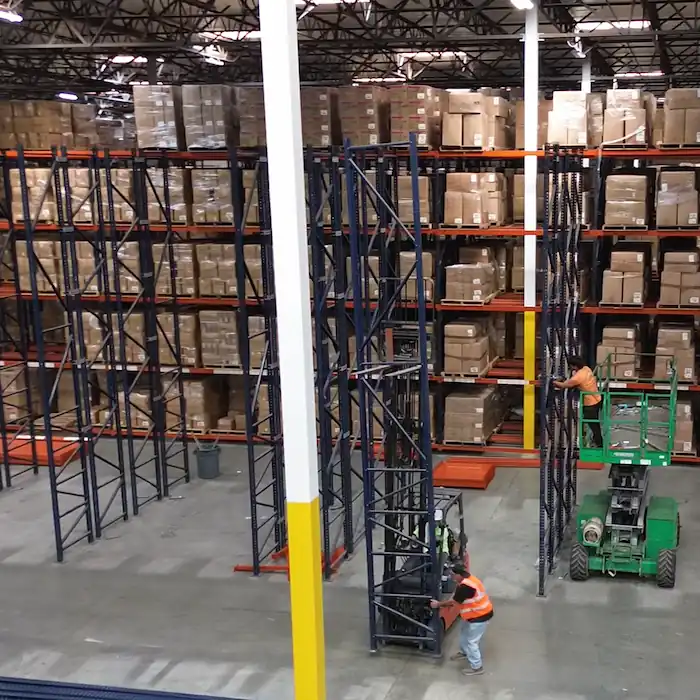
Plan the Move Before You Commit to Reusing Racks
Start with an inventory of uprights, beams, decking, and accessories. Photos of rack labels and connections, existing drawings, and load documentation help us identify the system and evaluate component compatibility. Visible damage or missing documentation may require further review through our pallet rack inspection services.
Next, compare those materials with the destination’s clear height, column locations, forklift aisles, pallet dimensions, and storage loads. Our warehouse layout design team can plan around those constraints. If the layout calls for additional or replacement parts, we can discuss new material or compatible used pallet racking, subject to availability and suitability. Our engineering and permit support team can help identify what documentation or review the new configuration may need.
How a Rack Removal or Relocation Project Works
1. Walk the site and agree on the scope
Start with a marked-up floor plan or a walkthrough so everyone can see the same boundaries. For a partial teardown, identify the last bay in each row that needs to come out and highlight any equipment that needs to remain. For a full removal, list related items such as wire decking, row spacers, guard rails, and column protectors so the quote reflects the work you expect. Share any areas with restricted access or work that another contractor needs to complete first.
2. Coordinate the work with your move calendar
Build the schedule around when inventory can be cleared, when the dismantling crew can access each area, and when trucks can reach the dock. If the building stays open, decide which pick paths and loading areas your team needs during each phase. For a relocation, confirm when the destination can receive materials. A gap between sites may require a plan for staging or temporary storage, especially if your old lease ends before the new facility is ready.
3. Review the handoff at each location
At the original warehouse, use the agreed scope to review the cleared areas, where retained components are staged, and any floor work included in the quote. At the new site, confirm the material list, installation areas, and the requirements that must be addressed before putting racks into use. Having a point of contact at both locations helps resolve discrepancies, such as a missing bundle or a work area that isn’t clear, before they affect the next phase.
Preparing for a Warehouse Lease Handback
Ask your property manager for the written surrender requirements before scheduling the teardown. Some projects call for removing rack frames, beams, and accessories from the premises. Others ask for specific treatment of anchors or holes in the floor. Send the instructions with your quote request and note any requirements for a walkthrough, contractor access, or building hours.
Leave time between the rack removal and the final property walkthrough, especially when other trades must work in the same area. If a flooring contractor or cleaning crew is booked separately, tell us when they need access. Agreeing on the sequence helps you compare quotes on the same scope and gives each crew a clear idea of what it will find when it arrives.
What Affects the Price of Rack Removal?
Two facilities with the same number of bays can have different costs. Rack height, system type, access for equipment, and available staging space all affect the labor and equipment required. The work window also matters. A single cleared area can be priced differently from several short visits that need to fit around shifts or inventory moves.
Ask for the scope to show how materials will be handled after dismantling. For example, stacking components for your own truck is a different scope from coordinating transport to another warehouse. Clarify who supplies loading equipment and whether anchor work, slab patching, or haul-away is included. These details are especially helpful when comparing a removal-only quote with one that includes reinstallation.
Keep Track of Which Racks Are Going Where
When the same racks will be used again, connect the inventory list to the destination layout before moving day. An aisle-by-aisle list can show which frame heights, beam lengths, and accessories are intended for each zone. Labeling components by type or destination can also make it easier to check material counts during loading and receiving.
A move is a good time to decide which areas should carry over and where the new building calls for a change. You may want to keep a familiar pick layout in one zone while dedicating more space to receiving or staging elsewhere. If a component’s condition or suitability is uncertain, flag it for review before assigning it a place in the new system. Decide early whether excess material will be retained, handled by your team, or included in a separate haul-away scope.
IMH coordinates projects from Riverside, California, and Delran, New Jersey. Tell us both warehouse locations when a move crosses service areas. We’ll discuss scheduling and the division of responsibilities at each site when we review your request.
What to Send for a Rack Removal Quote
A few photos and a rough rack count are enough to start the conversation. Include these details when available so we can determine whether a walkthrough is needed and prepare a more useful quote.
- Current warehouse address and destination address, if moving.
- Approximate number of bays or rows, frame heights, and rack type.
- Wide aisle photos plus close-ups of labels and connections.
- Target dates, work hours, and areas that must remain operational.
- Your floor plan, any written handback requirements, and what you want done with the racks.
Frequently Asked Questions
Can you remove one section and leave the rest in use?
Yes. Share a marked-up layout or photos showing the rows involved. We’ll review the boundary between the work area and the remaining racks before confirming the scope and schedule.
Does rack removal include anchors, floor repairs, and haul-away?
These items are scoped individually. Share the required floor finish and who will take the dismantled materials so the quote can state which work is included and who handles the rest.
How long will dismantling or relocation take?
Timing depends on rack quantities, system type, access, inventory clearance, and how the work needs to be phased. For a relocation, readiness at the destination also affects when reinstallation can start.
Can I start without a destination floor plan?
Yes. Send the destination address, approximate dimensions, and storage goals if you have them. The layout and reuse decisions can be refined once the site details are confirmed.
What if we need removal now and reinstallation later?
We can scope the two phases around different dates. Let us know where the racks will be stored between jobs, who will track the material, and when the destination is expected to be available. If the new layout is still being developed, identify the components you know you want to retain and share any available drawings. That gives us a starting point for the teardown and helps keep reusable material organized while you finalize the next phase.
Get a Quote for Your Rack Removal or Move
Tell us what needs to come down, what you want to keep, and when the space needs to be ready. You can attach photos or plans to help us review the scope.