How Drive-In Racks Help Southern California Warehouses Store More in Less Space
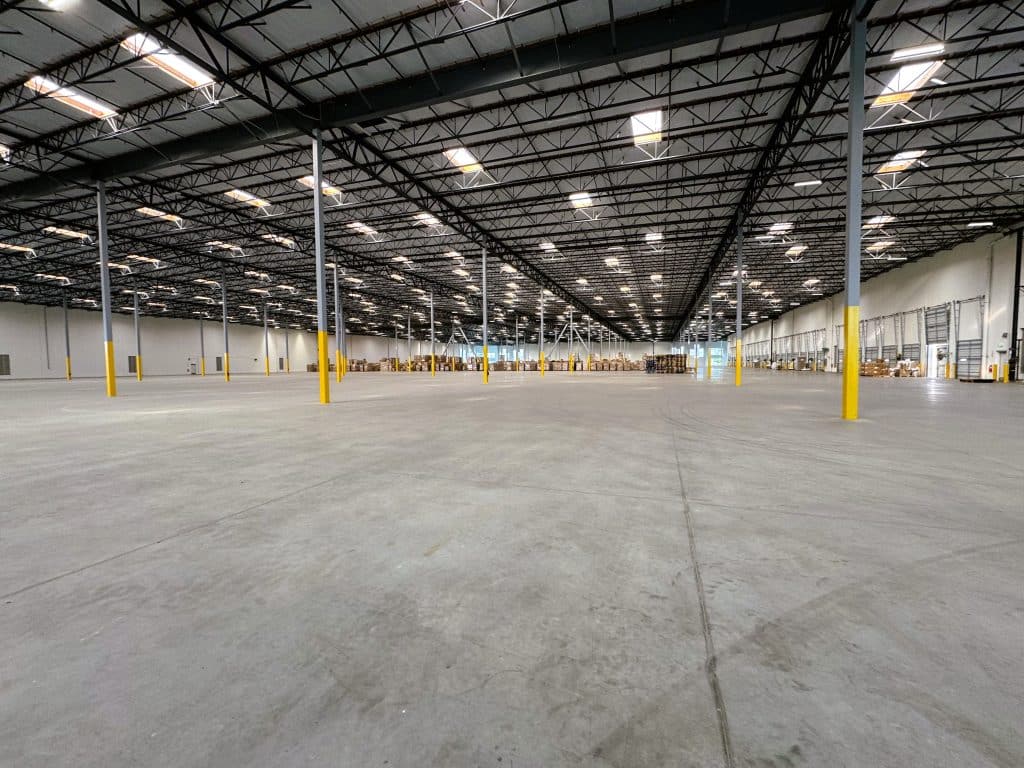
Warehouse space across Southern California is more competitive than ever. With rising lease costs in the Inland Empire, limited availability near the ports, and expanding demand from e-commerce and 3PL operations, storing more product without expanding your footprint has become a top priority for many facilities.
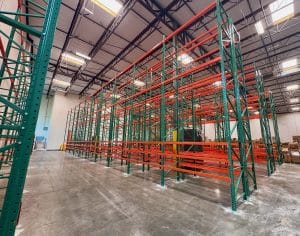
Drive-in racks continue to be a leading option for warehouses that need high-density storage, especially when handling large volumes of similar SKUs. Whether you’re operating a distribution center in Ontario, a food warehouse in Commerce, or a manufacturing facility in Riverside, drive-in racks can dramatically increase pallet capacity while keeping your building layout efficient.
Here’s why this style of racking remains a go-to solution for California warehouses trying to maximize every inch of space.
Looking for Drive In Racking for your warehouse here in Southern California?
Maximizing Pallet Storage in Tight Southern California Real Estate
One of the biggest challenges in SoCal is simple: space is expensive. The closer you get to Los Angeles, Long Beach, Orange County, or major Inland Empire routes like the 10 and 60 freeways, the higher the cost per square foot. Even warehouses deep in Fontana or Moreno Valley are seeing historic rental rates.
Drive-in racks address this issue head-on.
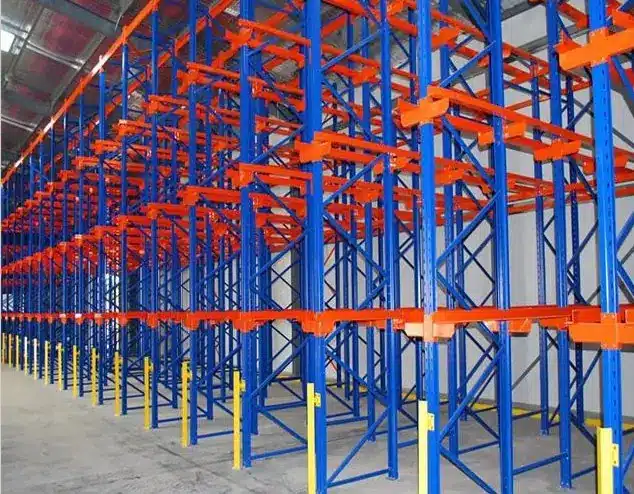
Because they eliminate almost all aisles, drive-in racks offer some of the highest storage densities available. Instead of having a separate aisle for every row, multiple pallets deep can be stored along a single lane. This dramatically increases pallet positions without requiring any additional square footage.
For industries with large quantities of identical products, such as:
- Food and beverage
- Cold storage
- Packaging materials
- Seasonal goods
- Bulk manufacturing
Drive-in racking becomes one of the most efficient ways to multiply storage capacity and reduce wasted space.
Supporting High-Volume Operations With Fast and Repeatable Flows
Many Southern California warehouses operate nonstop, especially those tied to the ports or to large distribution networks. Inbound trucks arrive in waves, peak seasons hit hard, and outbound orders must stay consistent throughout the year.
Drive-in racks support this fast-moving environment by:
- Allowing forklifts to load pallets deep into the racking
- Reducing travel time between aisles
- Keeping bulk SKUs grouped together
- Maintaining predictable flow patterns
- Providing a simplified layout for operators
Instead of scattering pallets across multiple aisles, warehouses can group products into high-density lanes. This not only speeds up storing inbound pallets but also makes locating and retrieving product faster.
For cold storage facilities in Vernon, food distributors in Santa Ana, and beverage warehouses in Rancho Cucamonga, the efficiency gains help reduce labor costs and improve overall throughput.
Improving Space Utilization for Bulk or High-Turnover SKUs
Southern California warehouses frequently deal with either very high turnover inventory or long-term bulk items that don’t need to be picked individually. Drive-in racks excel in both scenarios because they allow pallet-after-pallet storage without sacrificing stability or safety.
For example:
- Beverage warehouses can store multiple lanes of identical products, reducing picking complexity.
- Packaging suppliers can place full pallets of boxes or materials deep into lanes without reconfiguring the racking.
- Seasonal operations can consolidate slow-moving inventory into dense sections and keep fast-moving items accessible.
This concentrated layout keeps aisles open, traffic clean, and forklift routes predictable — a critical advantage in busy facilities where safety and efficiency go hand in hand.
Where selective racking excels in selectivity and speed, drive-in racks excel in volume. And in regions like Los Angeles and the Inland Empire, where every pallet position matters, volume often becomes the deciding factor.
Reducing Operating Costs for California Facilities
High-density storage doesn’t just increase capacity it also helps reduce operational expenses. With drive-in racks, warehouses typically see savings in:
- Forklift travel time
- Labor hours
- Energy usage (in cold storage)
- Space requirements
- Long-term storage costs
The reduction in aisles alone is a major cost benefit. More product stored in the same footprint means you’re getting more value from your building every single month.
Cold storage facilities benefit the most. Since refrigerated and frozen environments are incredibly expensive to operate in Southern California, drive-in racking lets operators shrink the cubic space they need to cool while still storing large quantities of product. This leads to major energy savings over time.
A Strong Match for the Most Common SoCal Warehousing Industries
Drive-in racks have become a staple in several local industries because their strengths fit the operational demands perfectly.
They’re widely used in:
- Cold storage facilities near the ports
- Food and beverage distributors
- High-volume 3PL operations
- Packaging and container suppliers
- Industrial manufacturers
- Seasonal bulk storage
Southern California’s diverse warehouse landscape makes drive-in racking particularly valuable because so many businesses depend on bulk and palletized storage rather than piece-picking. When the goal is to maximize pallet count and minimize wasted space, drive-in racks outperform other layouts.
Looking into Drive in Racking for your Warehouse?
Other Blog Posts You Might Like