Why Guard Rails Are Critical for Pallet Racking Safety in Southern California Warehouses
Southern California warehouses move fast. With nonstop forklift traffic, narrow aisles, and tight production schedules, pallet racking faces constant impact risks. One wrong turn or a momentary slip by a forklift operator can cause serious rack damage or even a collapse.
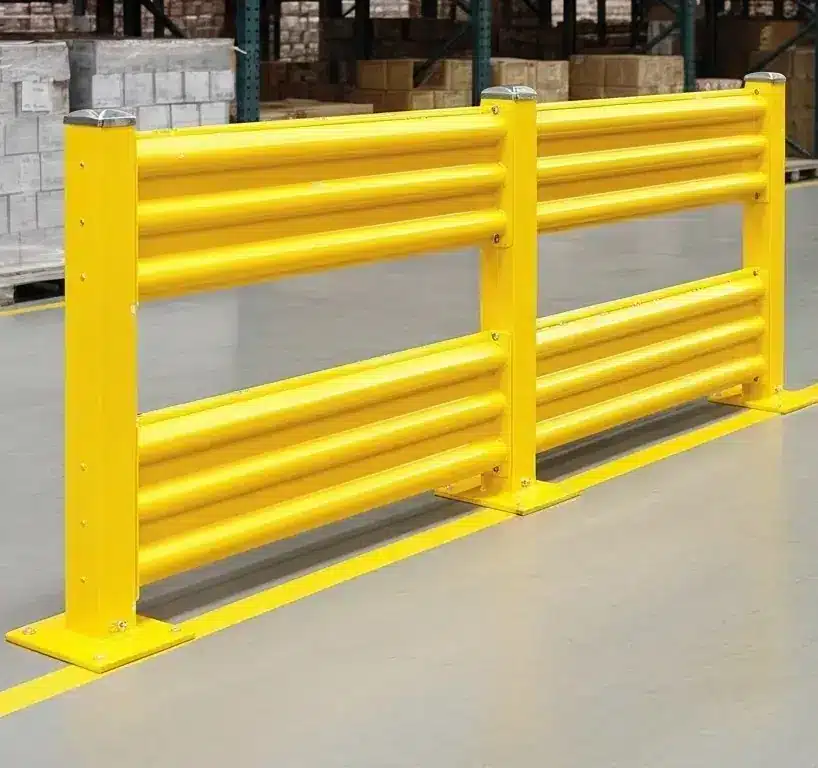
That’s why guard rails have become essential in warehouses across the Inland Empire, Orange County, Los Angeles, and surrounding regions. Guard rails act as the first line of defense, protecting pallet racking, equipment, walkways, and employees from accidental impact.
Here’s why guard rails are used in nearly every Southern California warehouse and why they are one of the most cost-effective safety upgrades available.
Interested in Guard Rails for your warehouse in Southern California?
How Guard Rails Protect Pallet Racking From Forklift Damage in Southern California Warehouses
Forklifts are the leading cause of pallet rack damage in busy SoCal facilities. With constant inbound and outbound movement, operators often navigate tight aisles, blind spots, and fast-paced workflows. Even skilled drivers occasionally misjudge turns or clip uprights.
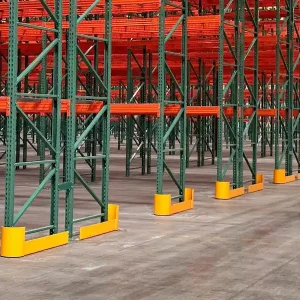
Guard rails protect pallet racking by:
- Absorbing forklift impact before it reaches the uprights
- Preventing accidental hits to pallet loads
- Maintaining bay alignment and rack stability
- Reducing the risk of structural weakening
Warehouses in Ontario, Chino, Fontana, and Riverside run some of the highest forklift volumes in the nation. That traffic increases the likelihood of collisions especially at the ends of aisles, tunnel bays, and intersections. Guard rails create a protective barrier that keeps both equipment and inventory safe. When pallet racks take repeated hits over time, they lose strength, develop bends, or become misaligned. Guard rails stop that damage before it starts.
Why Southern California Warehouses Use Guard Rails to Protect Pedestrian Walkways and Work Areas
Many newer Southern California warehouses feature mixed environments where pedestrians and forklifts share close quarters. Employees walk near staging areas, pack stations, pallet bays, and shipping lanes all areas where forklifts operate at high frequency.
Guard rails play a vital role in separating foot traffic from machinery. They help:
- Create designated pedestrian walkways
- Block forklifts from entering work zones
- Protect pack stations, conveyors, and equipment
- Reduce collision risk in narrow or congested areas
Facilities in Los Angeles County and Orange County often operate in older buildings with tighter layouts, making guard rail protection even more important.
In the Inland Empire, especially in larger 3PL and e-commerce facilities, guard rails help maintain a safe flow between employees and machinery during peak seasons.
A single impact can be dangerous guard rails help prevent those incidents entirely.
How Guard Rails Improve Overall Warehouse Safety and Compliance in Southern California
Southern California warehouses undergo regular safety inspections from internal teams, insurance companies, and sometimes fire departments. Damaged pallet racking or unsafe traffic flow are two of the most common issues inspectors look for.
Guard rails help warehouses stay compliant by:
- Preventing upright damage that compromises racking capacity
- Supporting OSHA safety standards
- Reducing trip-and-strike hazards in walk areas
- Protecting structural features like columns, electrical panels, and building walls
When pallet rack uprights are damaged, load capacity decreases significantly. In high-seismic regions like Southern California, a weakened rack is even more dangerous.
Guard rails provide a simple and effective safety buffer, ensuring the racking can withstand daily warehouse operations and comply with ongoing safety standards.
Why Guard Rails Offer Strong ROI for Southern California Pallet Racking Operations
Guard rails are one of the most cost-effective upgrades in a warehouse because the cost of damage far outweighs the cost of protection.
One forklift impact can lead to:
- Upright replacement
- Beam removal and reinstallation
- Temporary shutdown of impacted bays
- Labor for unloading and reloading pallets
- Required engineering inspections
- Delays in operations
In fast-moving facilities where uptime matters especially 3PLs, food distributors, and manufacturing warehouses — downtime carries a large financial cost.
Guard rails prevent these disruptions. They protect the racking investment, extend the life of the warehouse layout, and keep operations running smoothly. Most businesses that add guard rails recover the investment after avoiding just one potential impact or repair.
Facilities near the ports in Long Beach and Los Angeles, where forklift intensity is extremely high, often install guard rails throughout the building to minimize risk and protect high-value inventory.
Choosing the Right Guard Rails for Southern California Warehouses and Pallet Racking Layouts
Southern California’s warehouse variety means one style of guard rail doesn’t fit all. Depending on aisle width, forklift type, and rack configuration, warehouses choose between:
- Single-rail guard rails
- Double-rail guard rails
- Low-profile guard rails
- Bolt-on heavy-duty rails
- Lift-out rails for flexible access
Guard rails are commonly installed at:
- End-of-aisle bays
- High-traffic intersections
- Along pallet racking runs
- Around pick modules
- Near conveyors
- Surrounding pack stations
- Protecting office walls or equipment zones
Because SoCal warehouses often operate at high speed, double-rail guard rails are extremely popular they offer maximum strength and stop both low and high forklift impact points.
Guard rails are a foundational safety measure, especially in buildings with frequent operator turnover, fast-paced picking environments, or heavy forklift use.
Need a Quote for Guardrails for your warehouse?
Other Blog Posts You Might Like