Why Push-Back Racks Are a Smart Choice for Busy Southern California Warehouses
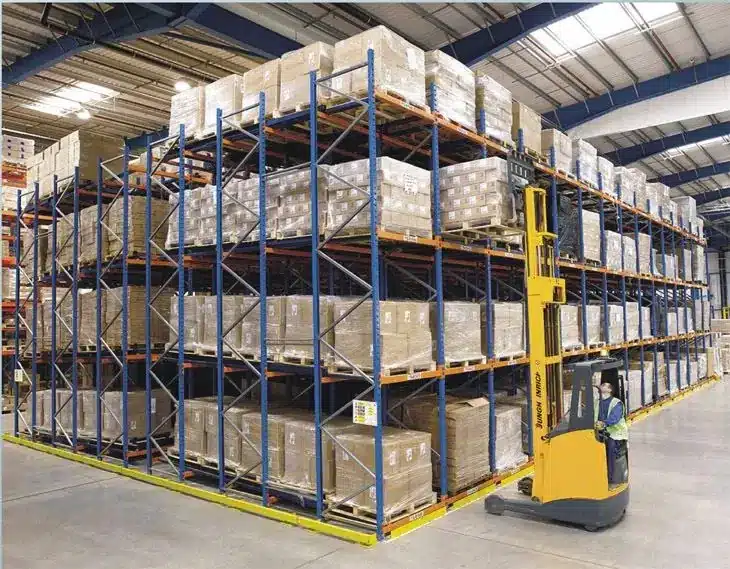
Southern California warehouses deal with constant movement fast inbound freight from the ports, high-volume outbound orders, and rapid SKU turnover. Whether you’re running a 3PL in Ontario, managing a distribution hub in Fontana, or operating a fulfillment center in Los Angeles, efficient pallet storage is one of the biggest factors in keeping costs down and operations fast.
Push-back racks continue to be one of the best high-density options for warehouses that need to store multiple pallets of the same SKU without sacrificing accessibility or speed. They’re especially popular in SoCal because they offer deeper storage lanes than selective racking, while still allowing forklift operators to pick from the front without driving into the rack.
Here’s why push-back racks are a strong choice for many facilities across Southern California — and what you need to consider before installing them.
Interested in Push-Back Racks For Your Warehouse?
Storing More Pallets Without Adding Aisles
Push-back racks are designed for 2-4 pallets deep. While some facilities try to push deeper, the practical and safe limit is three to four pallets maximum, because each level uses a nesting cart that rolls backward when a pallet is loaded and forward when one is removed.
This design gives you:
- High-density storage
- Fewer aisles
- Faster pallet access
- Better cubic storage in tall warehouses
Because Southern California industrial real estate is expensive especially near Long Beach, Los Angeles, and the Inland Empire being able to store more pallets in the same footprint is a major advantage.
Push-back works best when you have:
- A small number of high-volume SKUs
- Full-pallet storage
- Fast inbound and outbound cycles
- Repeatable picking patterns
It increases capacity the same way drive-in does, but with far better selectivity and speed.
Requiring Taller Ceilings and Proper Clearances
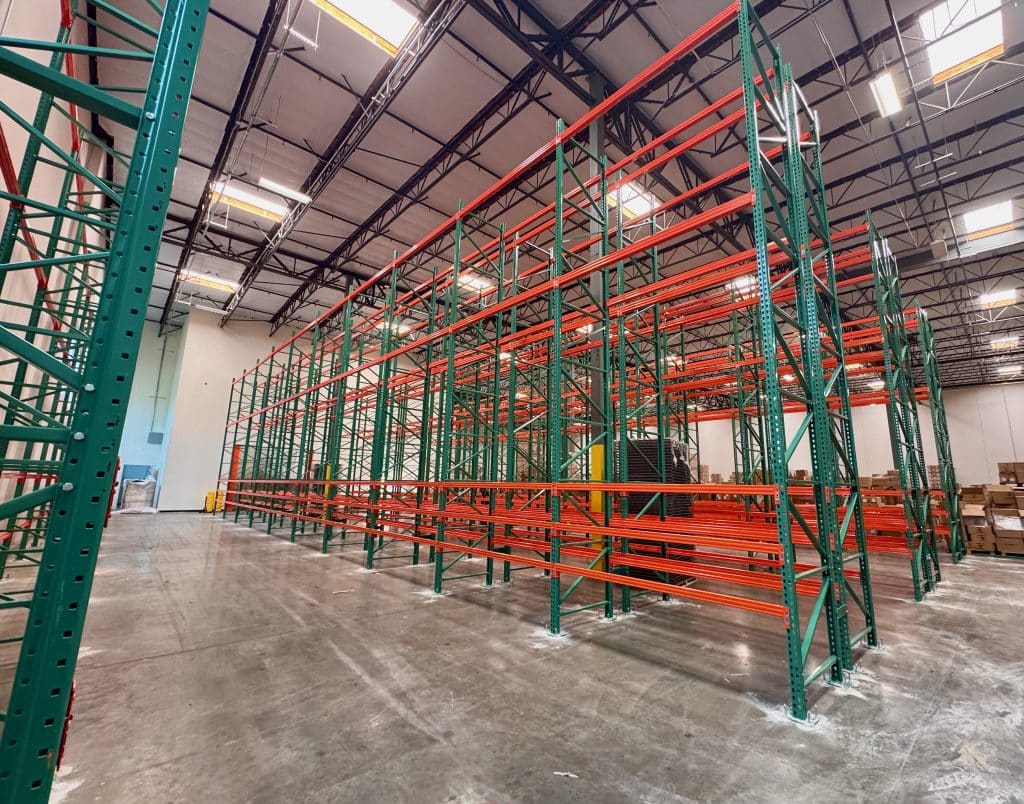
One detail that many warehouse operators overlook is the vertical space required for push-back racking. Because each pallet sits on a nesting cart, the rack needs additional clearance compared to selective racking.
This means:
- The building needs enough height to compensate for the stacked carts
- Beam levels may be slightly higher than standard selective layouts
- The warehouse must allow proper flue space and code-required clearances
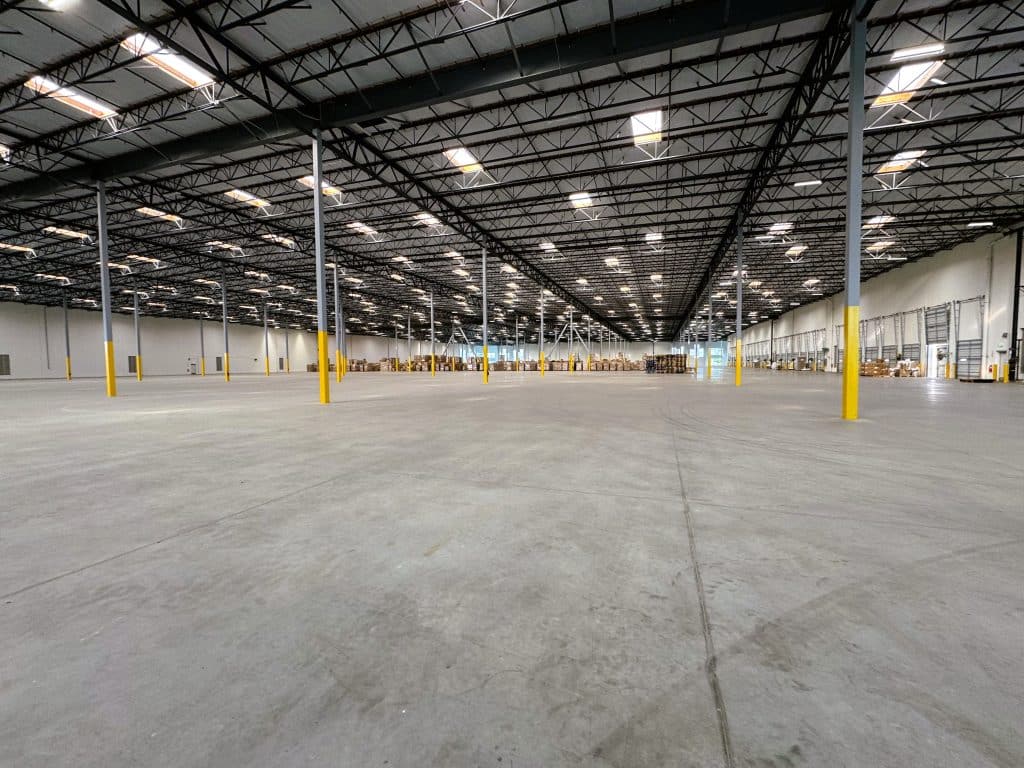
Warehouses in the Inland Empire which often have 28–36 foot clear heights are perfect for push-back layouts. Older buildings in Los Angeles or Orange County with lower rooflines sometimes need modified designs or fewer pallet levels.
If your warehouse has tall ceilings and you want to maximize cubic storage, push-back racking uses that height extremely well.
Improving Picking Speed for High-Volume, Low-SKU Operations
Push-back racks shine when your warehouse handles only a handful of SKUs but stores many pallets of each one. This is very common in:
- Beverage distribution
- Packaging and container storage
- Manufacturing components
- Food and ingredient warehouses
- Bulk materials
- Seasonal stock buildup
Forklift operators can load and unload from the same aisle because the carts roll forward automatically. This drastically improves picking speed compared to pallet flow or drive-in arrangements.
Instead of driving into a lane like with drive-in racks operators stay in the main aisle and place pallets onto the carts. This reduces travel time, improves forklift safety, and speeds up overall operations.
In a high-traffic facility in Chino, Rialto, or Santa Fe Springs, this simplicity is a huge win.
Understanding Lead Times and Custom Fit Requirements
Unlike selective racking, push-back racks are not off-the-shelf. They’re almost always custom-built for your pallet size, load weight, and SKU profile. This ensures the carts fit your pallets properly and move smoothly under load.
Because of this, typical lead times are:
- 6–8 weeks, depending on manufacturer schedule and freight timing
In Southern California’s busy warehousing environment where companies often need racking urgently right after signing a lease planning ahead becomes important.
If your racking project is tied to a move-in date or a strict launch timeline, push-back racks need to be ordered early to avoid delays.
The benefit is that once they arrive, installation is fast and your warehouse gets a high-density layout tailored exactly to your product.
Balancing Density, Speed, and Scalability in SoCal Warehouses
Push-back racking is one of the few options that offers:
- High storage density
- Quick pallet access
- Minimal forklift travel
- Strong safety profile
- Very organized SKU grouping
For warehouses storing dozens or hundreds of small SKUs, selective racking is usually better. But for facilities with a limited SKU count and high pallet counts, push-back racks outperform almost every alternative.
They help warehouses in Southern California:
- Reduce aisle count
- Store more pallets per square foot
- Speed up loading and unloading
- Keep traffic flow predictable
- Improve operational safety
Push-back racking isn’t the perfect match for every warehouse — but when the application fits, it delivers massive efficiency gains and long-term ROI.
Need To Figure Out If Push-Back Racks Are Right For Your Warehouse?
Other Blog Posts You Might Like